Five short essays on where we are currently at.
- A World of First Drafts
- Dreams and the Uncanny Valley
- Fiddlers in the Room
- The Last Hike
- Semantic Satiation of an Acronym
A World of First Drafts
I recently picked up a copy of “An Evening With Windham Hill”, a collection of early 1980s live performances by some of Windham Hill’s popular-at-the-time acoustic guitar players. I primarily bought the LP for the recording of “Turning: Turning Back” by Alex deGrassi, as it was the only way to get this on vinyl; the 1992 retrospective that also contains the track was never (officially) released on anything but CD.
The album contains a more interesting track on it, that being the first (?) performance of a Michael Hedges composition. Introducing the performance Hedges says “This is a new piece for [that] started out for guitar and then, er, all of a sudden it needed piano and about a week ago it needed bass so… We need to play it tonight. It’s dedicated to Steve Reich, and it’s called Spare Change.”
The performance starts out very Hedges like, with his (now) distinct playing style and tapping on his instrument, but then after about forty seconds the piano comes in and Hedges influence seems to be diluted. He pulls it back but seems to be fighting with the piano, and when the bass solo arrives at three minutes Hedges is then completely lost to Manring. The three instruments then battle for the remaining two minutes of the composition leaving us at an ending that feels unresolved. So unresolved it takes the audience several seconds to realise the performance is over.
The composition and its performance was very much a first draft. Some interesting ideas in places, but ultimately lacking cohesion, unsatisfying, and even forgettable. Hedges’ voice (that of his guitar) is lost amongst the parts that aren’t his.
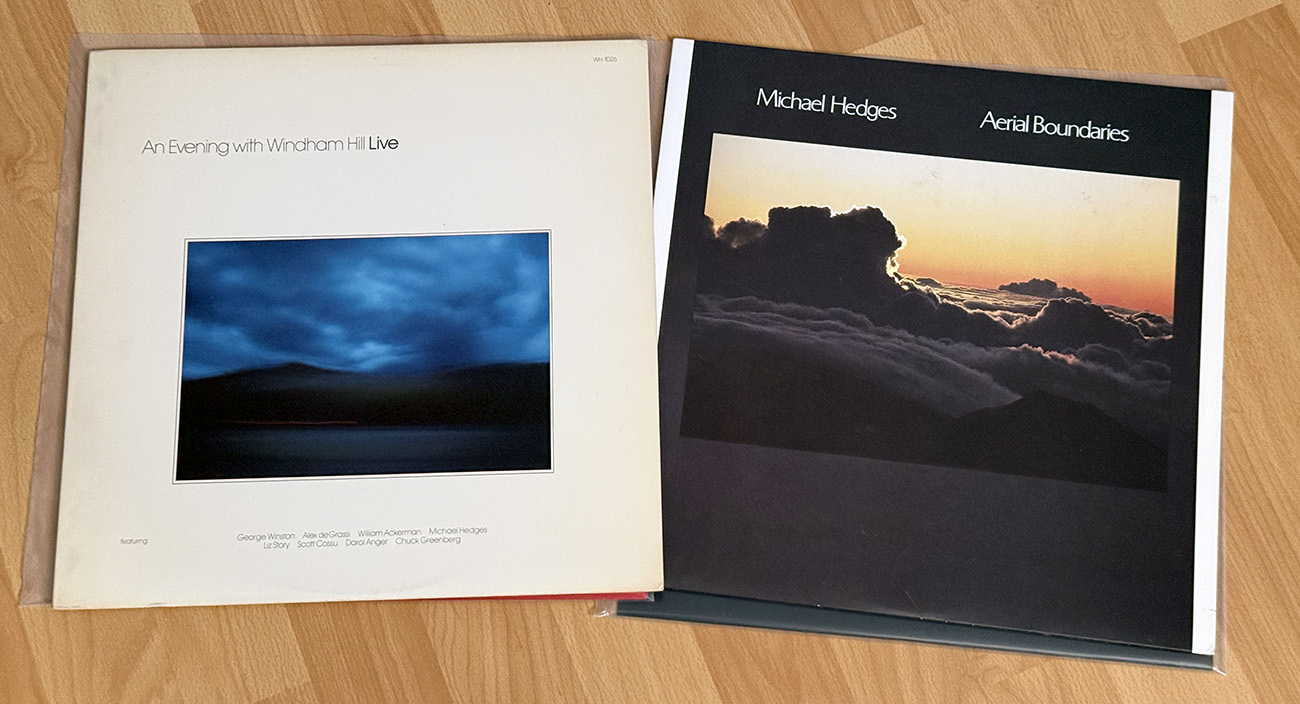
When Hedges released the final version two years later, on the album “Aerial Boundaries”, he knew the piece needed work so he made some major changes. The first was to drop the key two semitones lower. I guess he removed the capo from his guitar. The second change was more substantial: Hedges decided to replace the piano and bass parts with his own guitar, spending over one hundred hours recording sounds, looping them, playing them backwards, splicing tapes, pulling them apart and sticking them together, experimenting, all to get the textures that fit.
Over one hundred hours in the studio in 1983, and likely many hours after those first drafts in 1982, to create a five minute long piece of music. Hedges could have just released the original arrangement, but he knew it was mediocre so continued to refine it.
The version realised on “Aerial Boundaries”, and the liner notes explicitly use the verb realised rather than recorded, is probably the most striking work in Hedges’ entire discography.
Because there are other remarkable recordings on the album, especially the title track, and due to the near impossibility of performing the track live, “Spare Change” is often ignored. That doesn’t mean Hedges’ time and effort to refine it was a waste, as the track still stands out today. Along with the first live recording, the final version is a permanent record of an idea elevated to something interesting, influential, even epochal.
Fingerstyle guitar was going through some major changes in the early eighties, and Hedges was one of several important composers and performers at the time. Had he just sat back, been satisfied with the first draft, not torn it apart to rebuild, it would have been forgotten. I wouldn’t be writing about it today, and it’s possible it may have been discarded and failed to make the final cut for the album.
Perhaps the composition would have been dredged up some time in the future, when an artist’s career reaches that inevitable scraping of the barrel stage. Alas, Hedges was killed in an automobile accident in 1997, at the age of 43.
The obvious place I’m going with all this is that I increasingly feel like we are moving into a world of first drafts. One where ideas are formed but then delegated to something else to refine them. The problem with this approach is there is nothing new to pull from the tombola, you still have a first draft at the end of that process and haven’t gone anywhere compelling.
I’ve even had someone defend their approach with “the ideas are all mine”. But ideas are easy, execution and refinement are hard and that’s where your individuality comes through. Maybe your ideas are boring, and your arguments are weak? I’d still like to read them in your style. Writers have built entire careers on this.
The reason I read your blog, or listen to your music, or watch your videos, or look at your photos is because I’m interested in how you see and react to and interpret the world. If your voice and idiom is lost to the machine’s then you are no longer interesting and I’m no longer interested.
Dreams and the Uncanny Valley
A few years after moving to the mountains I had an idea for a photo project that would involve shooting images of well known vistas and then subtly replacing some of the mountain ranges with different peaks. Or removing parts entirely. Or just messing with the horizon in some way.
I played with this a little when I printed some postcards of the Matterhorn, flipping the mountain on its horizontal axis to result in a mirror image. I assumed people would notice, given that concrete chocolate mountain is in the top five of recognisable peaks. Nobody did, at least not for five years. Or nobody said anything as they weren’t quite sure if what they were looking at was wrong, a literal uncanny valley moment.
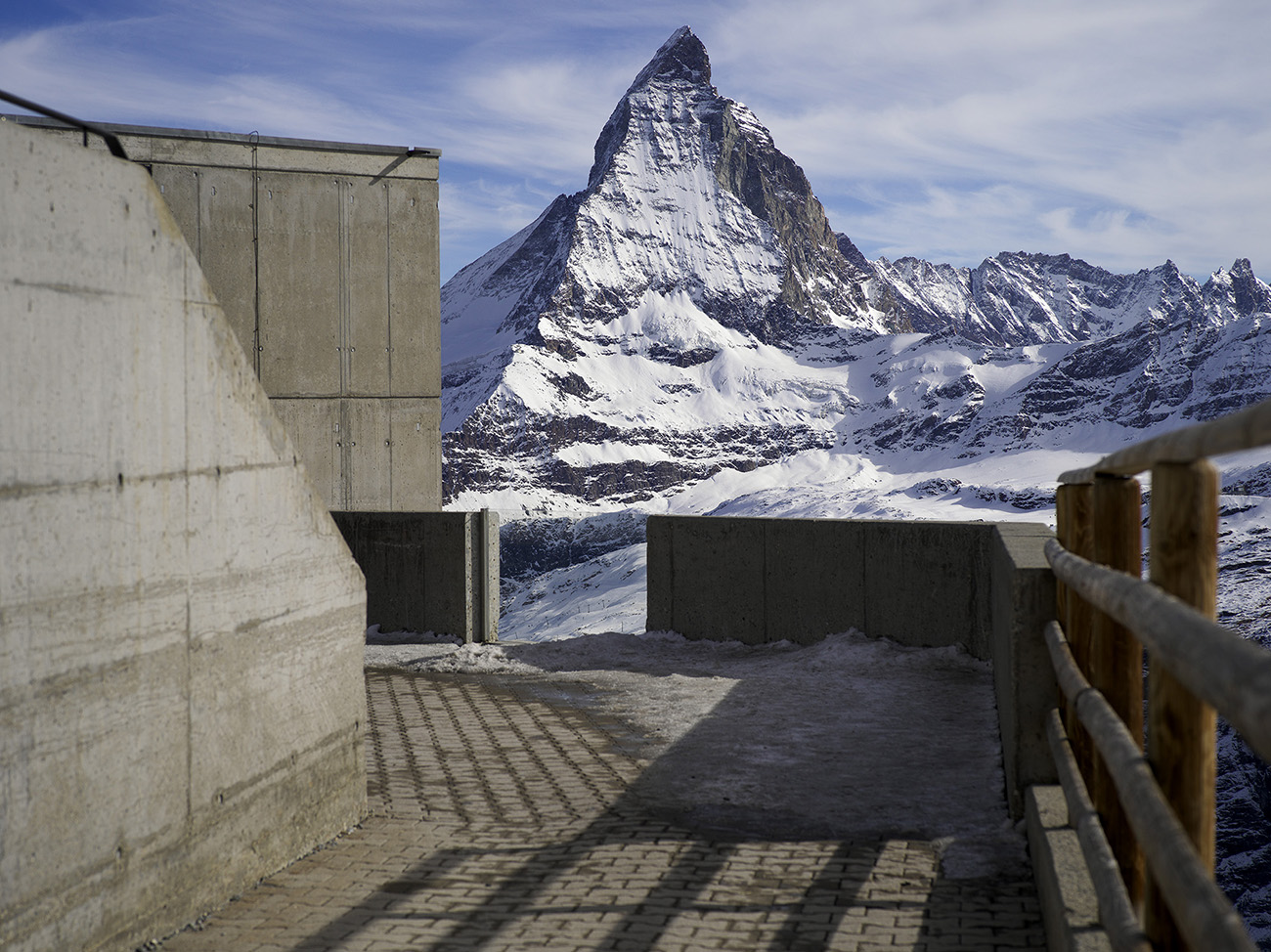
Sometime later I had a dream, or a nightmare since I tend not to remember my dreams, in which everything was subtly wrong. Like something out of a half forgotten Philip K. Dick story or tired science fiction trope. All my friends faces were a little different, but I was the only one that could see this.
All the music I knew was off in some way, a different tempo or transposed, or key lyrics were swapped with synonyms. Nobody else noticed and sang along like it had always been this way. They were oblivious to the changes. The books and films all had slightly different titles and plots, and the actors cast were not the same.
The walk I took to work was a diversion, my keys were interchanged, the office was rearranged, my keyboard layout was swapped. At lunch the microwave controls were on the left, the food tasted weird. None of my colleagues had any qualms.
Finally I realised that if that was the case externally, at the macroscopic level, then was it also the case at an atomic level? I rushed home to find my Roche Biochemical Pathways poster, unfolded it (the wrong way), and stared at the molecules trying to recall the chirality of the amino acids, nucleic acids, and sugars. But I couldn’t remember, it was too long since I had done any biochemistry.
And then I woke up.
Fiddlers in the Room
There’s a certain type of software engineer, I’ve met several times in my ongoing career, that I like to term a “fiddler”. When the fiddler is tasked with solving a problem, instead of thinking “I will solve this problem” they think “I will solve this particular class of problem”.
The non-fiddler will pick an existing solution, and if there isn’t one that fits they will code for the explicit problem at hand. The fiddler will build an entire system to cater for a hypothetical future and other people’s unknowns.
The result is something that is not actually generic enough to solve the particular class of problem, being too brittle, and is too broad to solve the original specific problem in a maintainable way. An excess baggage of logic and abstractions means cognitive overload. Having to think about the generic class of problem when trying to maintain for the specific problem is always, well, a problem.
Don’t get me wrong. Fiddlers are important, and have contributed to many critical parts of many ecosystems, and some fiddlers are very good at what they do; however, they are the minority and, more often than not, a one hit wonder.
A key tell of some fiddlers is that they like to use the latest tools to facilitate their fiddling, and this is the most dangerous fiddler of all. New tools are more likely to change quickly, and churn is the enemy in software engineering.
Now it seems that everyone can be a fiddler, so my term has become a tautology or changed to mean something else. Fiddling has been flipped on its head. Now it seems fiddlers can trivially generate for the explicit problem at hand, pulled from a vast corpus of existing classes of problems, likely previously generated by the previous generation of fiddlers. Those not-quite-generic-enough-and-a-little-too-brittle solutions.
And if the fiddling is not enough? Have an entire orchestra. Keep screaming “COMPUTER, DO SOMETHING!”
If and when it all goes wrong? Yes: “Switching over to manual control… good luck!” and of course: “This is the world’s smallest violin, and it’s playing a sad song for you.”
The Last Hike
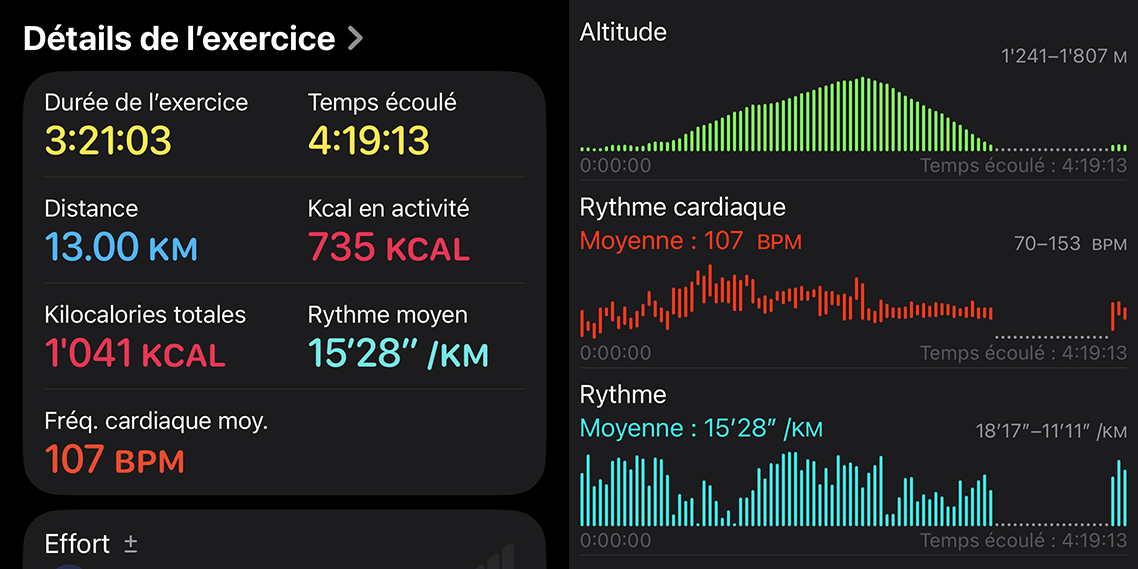
The last hike took place on the 25th May 2026. Temperature was 20ºC, humidity 53%. Distance 13.00km, altitude change +/- 566m. 735kcal was expended in energy, with an average heart rate of 107bpm (max 153, min 70). Duration was 3h21m. The computer decided the effort was “moderate”.
The last hike was somewhat more successful than the last bike ride, which took place on the 19th May 2026. Temperature was 10ºC, humidity 66%. Distance 11.56km, altitude change +/- 258m. 356kcal was expended in energy, with an average heart rate of 138bpm (max 161, min 69). Duration was 41:31.
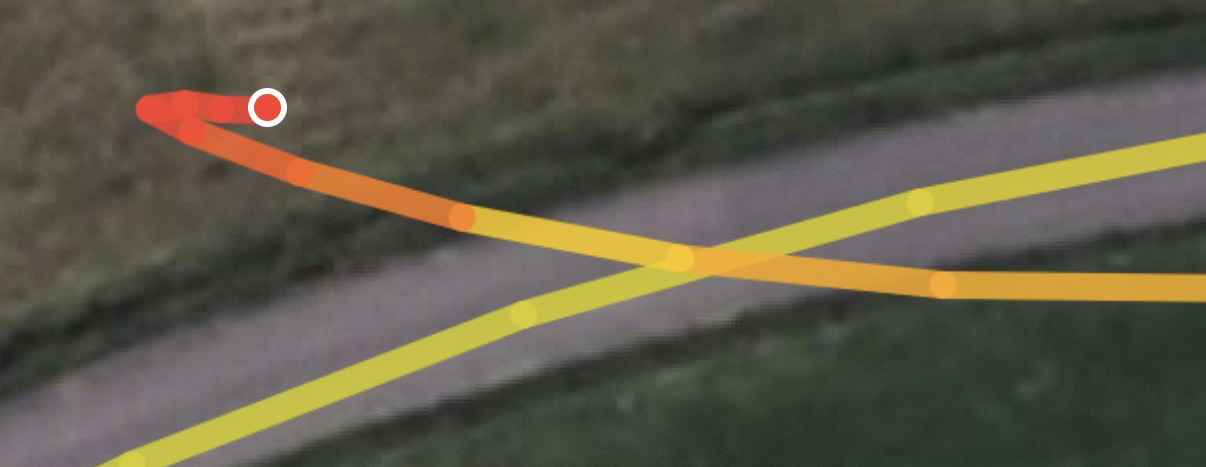
Max speed was 51km/h when a catastrophic puncture of the back tire took place, sending the rider veering off course into a 1m wide grass verge between the asphalt and a barbed wire fence. The rider was thrown over the handlebars of the bike, onto their right shoulder. Some moderate skin grazing occurred, but a six hour visit to the hospital was required to confirm no bones were broken. The computer, knowing nothing of this, decided the effort was “moderate”.
I decided to stop tracking all this stuff because I don’t know what advantages it begets other than the obvious: exercise is beneficial. The disadvantages are not worth it, trying to beat personal bests, going faster, worrying about regressions, contributing to the world’s largest and longest ongoing clinical trial?
My father used to run a lot in his youth. He would take me in the pram when he ran, and he ran so much he wore through two sets of wheels. There’s little evidence of that now, maybe a few photos in our attic, and his arthritic knees. It’s possible that his running has nothing to do with his knees, I know. None of this was tracked, so who knows? Even if it was tracked we wouldn’t know anyway. All of this data works at a population level, individually you need to ask yourself if you really need to know the minutia.
Exercise is beneficial until the bones hit the asphalt. Even then, the net benefit is worth it. Just move a few times a week for more than a few minutes and you’ll feel better.
Semantic Satiation of an Acronym
There has to be an end state to all this, eventually? Surely? A point at which it just becomes the norm, at which it is everyday, normal, mundane? A point at which we can just all get on with our lives and benefit from the good, and be protected from the bad. A point where the thing producing so much noise is reduced to a background hum that can be ignored.
I can't seem to escape this in any place. Technical discussions normally reserved for office work hours spill out into social settings. The pub, the dinner table, with strangers on a plane, in a queue, at a gig. I hear horror stories of wannabee software engineers making all the mistakes newbies make, but with none of the guardrails or mentoring to steer them in the safe direction. I end up talking shop with people I would never want to be my colleagues.
I'm not trying to gatekeep here, I have no kingdom to protect, rather I am worried that the bar being so low will cause many people to trip over it. I do find this stuff useful, in the very specific areas it is currently limited to. It will become more useful in other areas over time and hopefully less dangerous, but that's an unknown for now.
I didn't think semantic satiation was possible with an acronym. Can I please just go one day without hearing about this. Just one.